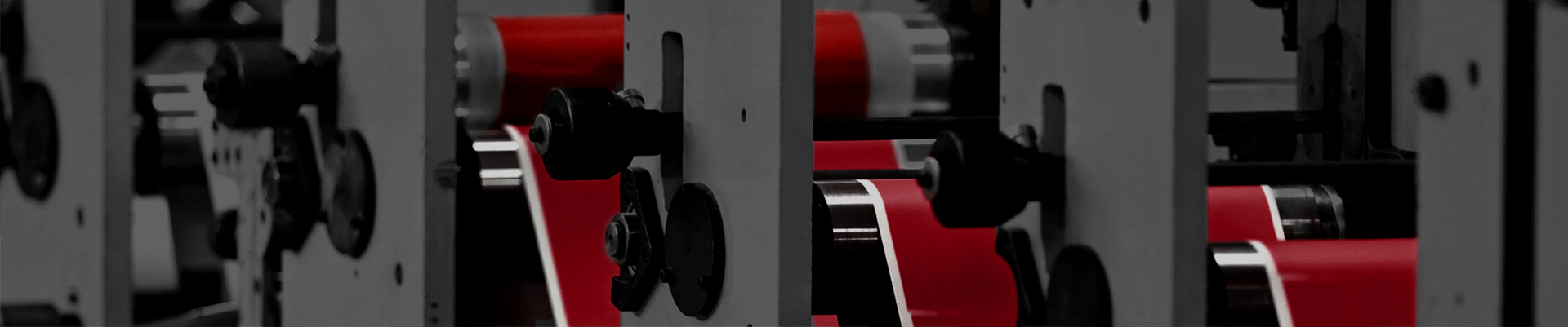
Everyone in the supply chain utilizes labeling, but for a production-focused entity like yours, labels are a direct input to your manufacturing process. Every facility is a potential high-volume user, with some operations consuming millions of specialized labels annually across diverse shapes, sizes, and applications. Our primary focus is on pressure-sensitive labels—the standard for industrial use—which feature a ready-to-use adhesive backing.
The Sales Advantage: When quoting labels, always build relationships with both the Purchasing Manager (for procurement efficiency) and the Production Manager. The Production Manager is keenly focused on performance and reliability, understanding that a cheap, failing label that causes line stoppage easily negates any small cost savings. Our expertise lies in preventing these costly failures, making us a value-driven partner, not just a supplier.
Pantone Matching System (PMS) colors are the industry standard for ensuring exact color consistency across different print runs, materials, and locations. They provide a precise language for color.
Providing clean, correctly formatted artwork is critical for rapid, error-free production. We prefer layered files with all elements included.
A label is a multi-layered component engineered for performance.
The adhesive is dictated entirely by the application environment and the surface material (substrate). There is an endless combination of facestocks and adhesives, ensuring we can meet almost any requirement.
Finishing adds a protective layer, extending the label's life and improving appearance.
To ensure the highest print quality for your custom labels, we accept a variety of industry-standard file formats, including high-resolution PDF, Adobe Illustrator (AI), EPS, and high-quality PNG or JPG files.
Direct thermal labels use a heat-sensitive coating that darkens when exposed to the printhead — no ribbon required. They are ideal for short-term applications such as shipping labels, receipts, and food date-coding, where the label does not need to survive heat, UV light, or harsh chemicals over time.
Thermal transfer labels use a ribbon to transfer ink onto the label surface using heat. The printed image is highly durable and resistant to fading, heat, moisture, and chemicals — making thermal transfer the preferred choice for barcodes, asset tags, product identification, and any label that must remain legible for months or years.
Not sure which is right for your application? Contact our team for a recommendation.
Applying labels in cold or wet environments is one of the most common sources of labeling failure. Standard permanent adhesives are not formulated to bond to cold, wet, or frost-covered surfaces. For freezer and cold-chain applications, the correct adhesive makes all the difference.
Key tip: Always specify both the application temperature (the temperature at the time of labeling) and the service temperature (the lowest temperature the label will experience in use). These may be different and both affect adhesive selection. Get a quote and our team will match the correct adhesive to your environment.
To provide the most accurate price and the correct material recommendation (the best value), you must gather the following information:
Our team has over 25 years of experience matching labels, adhesives, and printers to production environments. Get a targeted quote in 24 hours.
We are committed to being a trusted, single-source provider for all industrial identification and labeling needs. For over 25 years, we have specialized in delivering a complete line of high-quality products, from custom-printed labels to advanced thermal printers and label application systems.